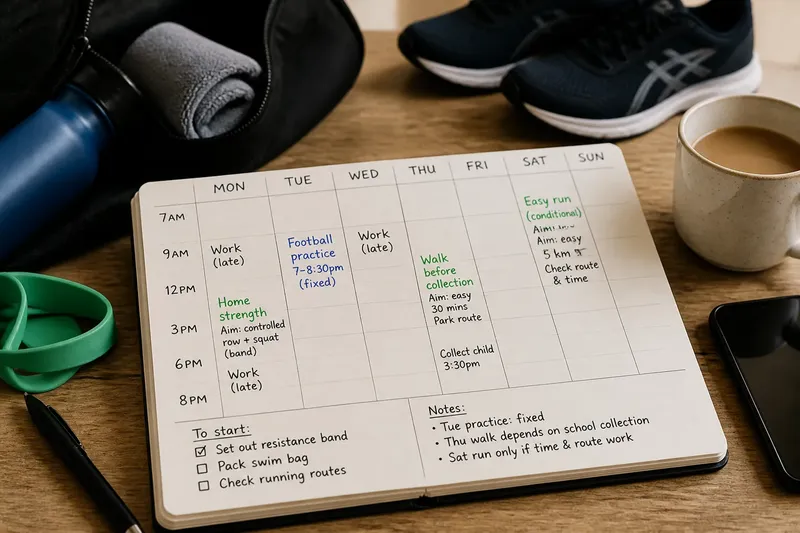
How Often Should You Train? Choose a Frequency You Can Repeat
Training frequency should match your sport, schedule and recovery. Learn how to choose a repeatable weekly pattern and decide whether to add a session.
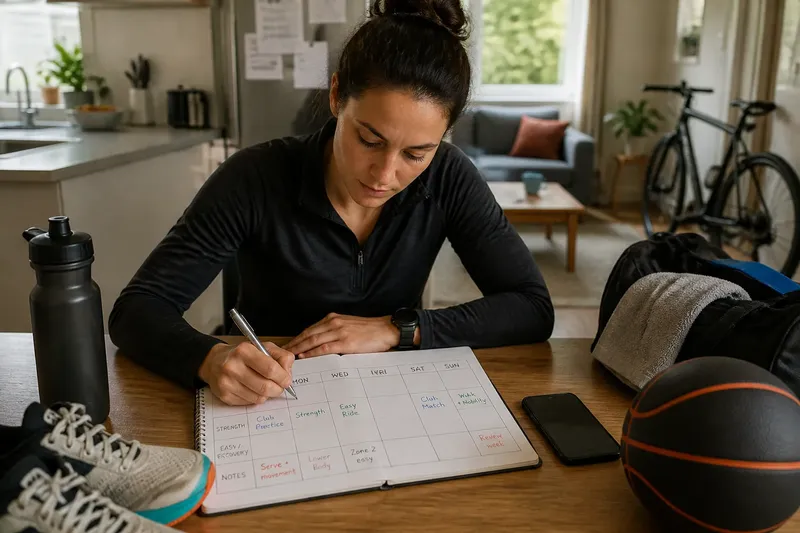
How often should you train if you want to improve without letting sessions take over your week? Training frequency works best when it reflects the practice your sport needs and the number of appointments your calendar can actually hold.
For recreational sport and fitness, counting sessions is less useful than deciding what each one is for. A week might include a club practice, a strength session and an easy ride, for example. The mix matters: three sessions with distinct purposes can be more workable than three demanding workouts competing for the same time and energy.
Set frequency around the practice your goal requires
Start by naming the skill or quality you want to work on. A person preparing for a weekly tennis match might need regular court time to practise serving and movement. Someone who wants a steadier cycling routine may value repeatable rides more than extra gym visits.
Then look at what your current sessions already provide. If your sport practice includes plenty of running, adding a hard interval session may duplicate its demands. If you rarely practise a particular skill, a short, focused session could fill a genuine gap without turning the whole week into training.
Think in terms of session roles rather than a target count. You might plan one sport-specific practice, one session for general strength and one easy activity for enjoyment. The roles can change with your goal, but each session should have a reason to occupy space in your week.
Write one purpose beside each planned session. If two sessions have the same purpose, decide whether both are needed or whether one can be made easier.
Count the whole appointment when planning your week
A workout’s calendar cost includes more than exercise time. Travel, changing, equipment and the transition back to work or family plans all matter. A gym visit might require a larger block than a home strength session, even if the exercise itself is brief.
Mark fixed commitments first, such as team practice, work shifts or caring responsibilities. Then place optional sessions in the spaces that remain. Leave room for meals, sleep and ordinary errands instead of assuming every gap is available for training.
Consider how sessions sit beside one another. Two demanding practices close together may leave you less ready for the second; moving one or making it easier could preserve its purpose. A weekly plan does not need a perfect pattern, but it should not depend on every day going smoothly.
Use your normal week as the test, not a rare quiet one.
Choose between adding a session and changing an existing one
Adding a session makes sense when it contributes something useful that the current plan does not provide and there is a realistic place for it. Changing an existing session may be better when time is tight. You could replace part of a general workout with skill practice, or make one ride easier so it supports consistency rather than adding another demanding outing.
Frequency is only one way to adjust a routine. You can also change duration, effort or focus. Alter one feature at a time when possible, so you can tell whether the new arrangement fits. Adding another session while also making every existing workout harder makes the week difficult to assess.
Say you play recreational basketball once a week and have a free evening that often disappears into errands. You want more ball-handling practice, so you choose a short home session with a ball and a clear focus on dribbling, rather than adding another full court workout. You place it on that evening, then note whether it happens, whether it serves its purpose and whether it leaves the basketball session feeling manageable. If the evening repeatedly fills up, you could move the practice to a reliable lunch break or fold a few drills into the existing session. The result is a decision about fit, not a claim that the added practice will produce a particular performance change.
Track whether your planned frequency is workable
A simple weekly note can show where your intended schedule differs from your actual one. Record the session’s purpose, whether you did it, and a brief observation about timing or how you felt afterwards. A paper diary, phone calendar or notes app is enough; detailed metrics are optional.
Review the pattern across ordinary weeks. One cancelled session because of an appointment does not settle the question. Repeated clashes, rushed starts or a growing reluctance to attend may mean the frequency, placement or session type needs changing.
- Check whether a session repeatedly conflicts with work or caring plans; if it does, move it to a more reliable opening, or remove it if no realistic slot exists.
- Check whether travel and preparation make the appointment difficult to fit; if they do, choose a nearby, home-based or shorter option, or keep the session only if its purpose justifies the extra time.
- Check whether two sessions duplicate the same demanding work; if they do, change one to an easier or different focus, or drop it if the week still feels overloaded.
- Check whether you arrive distracted or unusually depleted for familiar practice; if you do, make the preceding session easier or create more space, and seek qualified health advice if fatigue is persistent or concerning.
- Check whether an optional session has a clear purpose; if it does not, give it a specific role, or remove it if it adds no useful practice.
- Check whether you remain willing to return to the next planned session; if you do, keep the arrangement under review, and if you do not, reduce the demand or change the timing before adding more.
These observations do not diagnose a health problem. If fatigue is severe, persistent or accompanied by concerning symptoms, stop increasing your workload and speak with a qualified health professional.
Questions people ask about training frequency?
How many sessions should a recreational athlete do each week?
There is no single number that suits every sport, goal and schedule. Start with the sessions needed for your chosen practice, then check whether their timing and effort leave room for the rest of your life.
Is one long session better than several shorter ones?
It depends on the activity and the time you can reliably set aside. Several shorter practices can make repetition easier to schedule, while one longer session may suit an activity that needs sustained practice or involves a difficult journey.
Should I train when I feel tired?
Ordinary reluctance is different from feeling unwell or unusually depleted. If fatigue is persistent, severe or worrying, rest and seek qualified advice rather than treating the calendar as an obligation.
How can I tell whether an extra session belongs in my plan?
Check whether it has a distinct purpose, a reliable place in your week and a manageable effect on the sessions around it. If it is repeatedly cancelled or makes other practice harder to attend, change its timing or focus, or take it out.
Make a frequency decision that can change with your schedule
Keep an added session if it serves a clear purpose and fits alongside the sessions that matter most. Adjust it if the goal is useful but its timing, effort or format is causing friction. Remove it if it repeatedly crowds out more relevant practice or leaves too little room for recovery.
Your training frequency can change with work, family plans, sport seasons or energy. A lighter week is not a failed plan; it may be the sensible shape for that period. When you reconsider training frequency, ask which sessions deserve a place now and what evidence from your own calendar would prompt a change.
Before adding another appointment, check the week ahead and name what that session will replace, support or teach. If nothing has a clear answer, keep the space open until you can give the session a useful role.