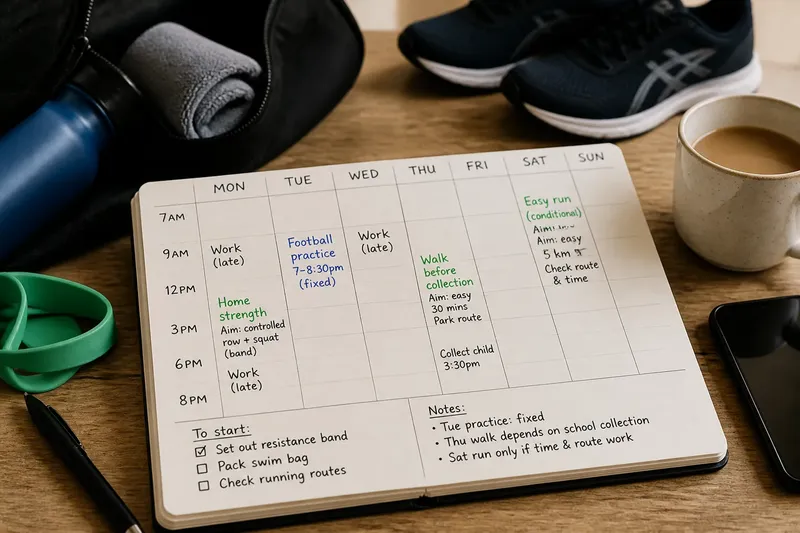
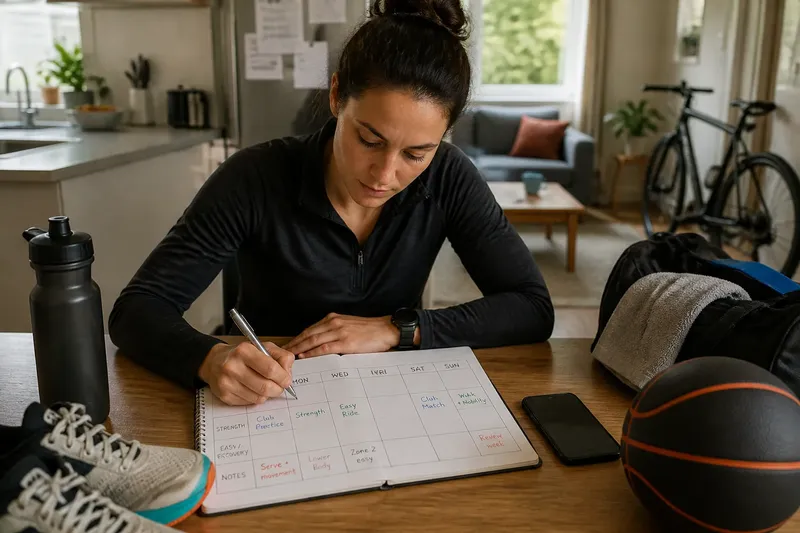
Start with One Aim: Giving a Training Session a Clear Shape
A one-aim training session is easier to follow and review. Choose a focus, match activities to it and adjust the plan when time or energy shifts.
Why does a training session that looked sensible on paper turn into a muddle once you begin? Often, it is trying to do too many jobs at once. A one-aim training session gives each activity a reason to be there, making the plan easier to follow and easier to review afterwards.
This does not mean every session must be narrow or repetitive. A run can include a warm-up, some steady work and a cool-down while still serving one main purpose: practising an even pace, for instance. The useful distinction is between the session’s main aim and the supporting parts that help you reach it.
When the plan feels like a list of unrelated activities
A common planning snag is adding every useful-sounding activity to one session. A recreational footballer might schedule passing drills, short sprints, shooting practice and a long run, then struggle to give any of them proper attention. The likely cause is planning by activity rather than deciding what the session should develop.
Try writing one outcome at the top of the plan before choosing drills. Make it observable but not grand: “practise receiving the ball and turning into space” is more useful than “get better at football”. Then keep activities that support that outcome and move unrelated ones to another day.
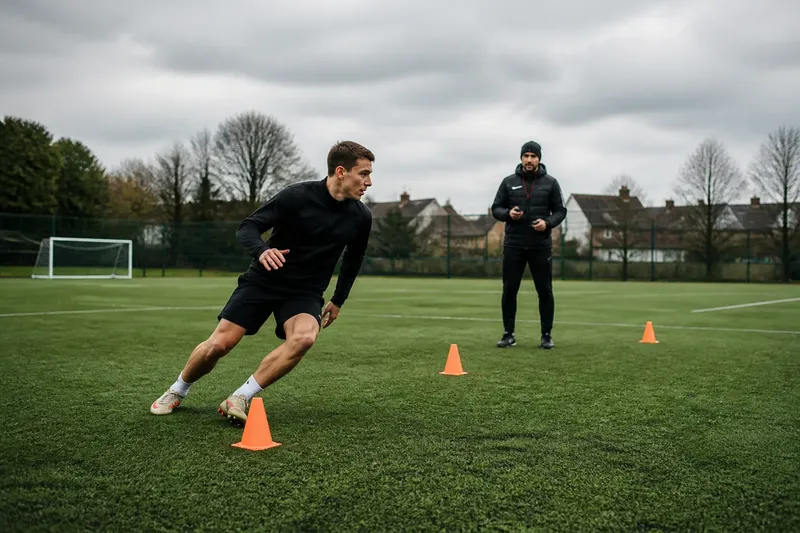
Say you have an hour at the local pitch and want to work on controlled changes of direction. You might begin with an easy movement warm-up, practise turns around cones at a manageable pace, then finish with a few relaxed repetitions while focusing on balance. The expected observable result is that the session stays centred on turning smoothly, rather than becoming a collection of unrelated fitness tests.
Write the aim in a sentence you could remember without checking your phone.
When choosing one aim feels like neglecting everything else
It can feel uncomfortable to leave out a skill, muscle group or fitness quality that also deserves attention. This often happens when a session is treated as the only chance to make progress. The plan then grows until there is too little time or concentration for any part to feel worthwhile.
Think of one aim as the session’s priority, not its only ingredient. A strength session focused on practising controlled squat technique can still include a warm-up and a few suitable supporting movements. Those elements should help you prepare for, or complete, the main work rather than compete with it.
If the secondary activity is substantial in its own right, give it a separate session or choose it as the main aim on another day. This keeps the week varied without asking one workout to cover every need.
Keep the supporting work modest enough that the main aim remains obvious.
When the aim is too vague to guide your choices
“Work on fitness” does not tell you which activities belong in the session, how to pace them or what to notice. At the other extreme, a highly elaborate target can be hard to hold in mind during an ordinary workout. The cause is often a goal that describes a broad ambition rather than the focus of today’s practice.
Give the aim a clear action and a useful quality to attend to. For example, “practise steady breathing during an easy cycle” tells you what to do and what to observe. “Improve endurance” may still describe a longer-term ambition, but it is less helpful for choosing the next activity.
For sport practice, name the moment you want to work on: a tennis serve toss, a swimmer’s relaxed turn, or a runner’s even effort on a gentle hill. For general fitness, name a movement or training quality: controlled lifting, comfortable aerobic work, or balance during single-leg movements. Keep the language plain enough to recall mid-session.
If you cannot tell whether an activity supports the aim, the wording may need sharpening.
When warm-ups and finishers take over the session
Warm-ups, mobility work and finishers can be useful, but they sometimes expand until the central practice is squeezed out. This is especially easy when the main aim feels demanding and the less focused parts seem more comfortable. The result is a session that contains plenty of motion but little time for its intended work.
Decide what the main block needs before filling the edges. A warm-up should prepare you for the movements and effort ahead; it need not become a separate workout. A cool-down can help you settle after training, but it does not need to prove that you worked hard.
When time is short, preserve a smaller version of the main practice rather than keeping every accessory. If your aim is to rehearse a relaxed swimming stroke, a brief warm-up followed by focused lengths may serve that purpose better than a long circuit of unrelated exercises.
Give the main work first claim on the time and attention you have available.
When the session changes because of time, space or equipment
A planned activity may not be possible when the pitch is busy, the gym equipment is occupied or your available time changes. If the plan depends on one exact drill, that disruption can make it feel unusable. The underlying issue is that the activity has become the plan, even though the aim is what matters.
Choose a substitute by asking what feature of the activity serves the aim. If you planned to practise short accelerations on a clear track but the space is crowded, you might switch to controlled, brisk starts over a safe, unobstructed distance—or defer that work and practise a different aspect of the same session focus. Do not force a substitute that changes the session into something else.
It helps to note one alternative while planning: a bodyweight version of a movement, a quieter area, or a lower-impact option. Adapt the choice to your abilities and the space available. For equipment use and activity guidance, follow the relevant manufacturer instructions, governing-body advice and local rules.
Keep the aim steady when practical; change the activity when circumstances require it.
When effort rises and the original aim stops making sense
Sometimes you begin feeling fresh and later notice unusual fatigue, discomfort or difficulty concentrating. Sticking rigidly to the written plan can turn a useful session into an unwise one. This problem often comes from treating a session aim as a command rather than a guide.
Pause and consider what has changed. You may be able to keep the same focus at an easier effort, reduce the amount of work or stop the session. For example, if the aim is controlled technique and your movements are becoming hurried, reducing the challenge may preserve the purpose better than pushing through increasingly untidy repetitions.
Sharp, worsening or unusual pain is a reason to stop rather than work around it. For persistent symptoms, health concerns or uncertainty about what activity is appropriate, seek advice from a qualified healthcare professional.
Adjusting the plan is part of planning well, not evidence that the session has failed.
When reviewing the session leaves you with no useful answer
A plan is easier to review when its aim gives you something specific to notice. Without that anchor, people often judge a session only by whether it felt hard or whether they completed every activity. Neither tells you much about whether the intended practice happened.
Afterwards, record a brief observation linked to the aim. You might note that your pace felt even, that your balance became less steady when tired, or that the chosen drill was too complicated to repeat confidently. You do not need a detailed diary for this purpose; a sentence or two can point towards a sensible adjustment next time.
Avoid turning the note into a verdict on your ability. “The turns felt rushed after the harder efforts” offers more practical information than “I am bad at changing direction”. Keep the observation close to what you actually noticed.
Review the aim, not just the amount of work you completed.
Questions to ask before choosing the session’s activities?
How do I choose one aim for a mixed training session?
Pick the quality or skill that deserves the most attention today, then let the other parts support it. If two aims need different kinds of work, consider giving each its own session rather than squeezing both into one.
Can one session have more than one focus?
It can include several activities, but one main focus makes it easier to decide what to prioritise and what to cut when plans change. A second focus can work when it is brief and genuinely compatible with the first.
What should I do if I finish the main work early?
First check whether the main aim has had enough attention and whether you still feel comfortable continuing. If so, add a small supporting activity or finish as planned; extra work is not automatically more useful.
How often should I change a session aim?
Change it when your broader plan, available conditions or current readiness calls for a different focus. Keeping an aim for a while can make sessions easier to compare, but repetition is not a reason to ignore discomfort or a clear change in priorities.
A clear aim makes small adjustments easier
To give a training session a clear shape, write one practical aim, choose activities that support it and decide what you will notice afterwards. Keep a simple alternative in mind for ordinary disruptions, and let your judgement guide adjustments when energy or comfort changes. The result is not a perfect plan; it is a session whose choices make sense together.
Before your next workout, write the aim on the first line. If the plan changes, that line can help you decide what to keep, what to alter and when it is better to stop.